
Pharmacy business acquisitions have become an important strategy for expanding healthcare operations, strengthening market presence, and creating long-term investment opportunities. As the healthcare industry continues to evolve, pharmacy owners, investors, and established healthcare organizations are increasingly evaluating acquisitions as a way to improve operational efficiency and achieve sustainable growth.
Understanding the economics of pharmacy business acquisitions requires examining financial performance, purchase valuations, operating expenses, reimbursement structures, and future revenue opportunities. A successful acquisition is not simply about purchasing an existing pharmacy; it involves evaluating its financial stability, market position, operational capabilities, and potential return on investment.
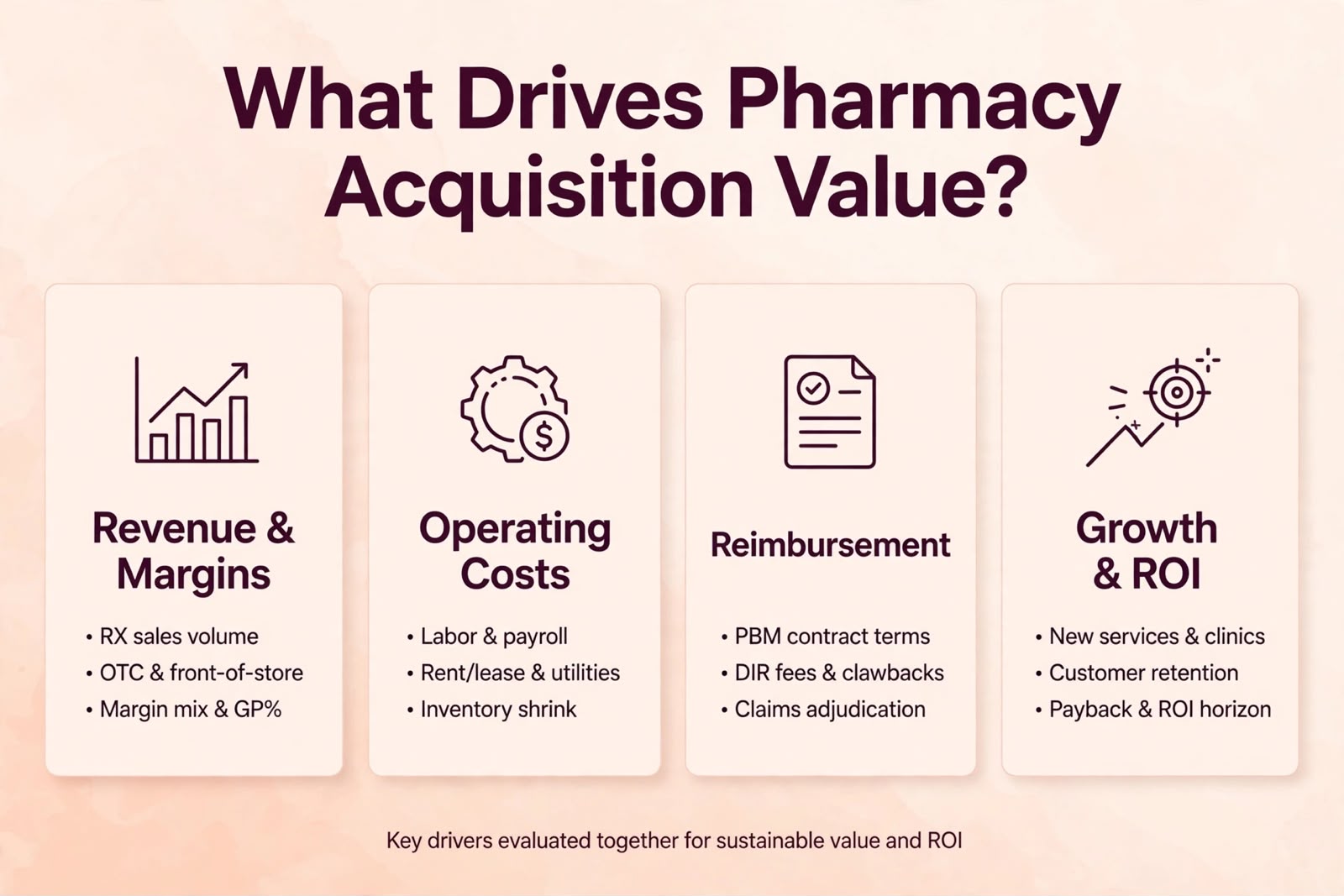
1. Understanding the Financial Structure of Pharmacy Acquisitions
The financial structure of a pharmacy acquisition plays a major role in determining whether a transaction is economically beneficial. Buyers must evaluate the pharmacy’s revenue, operating expenses, profitability, outstanding liabilities, and overall financial condition before making an investment decision.
Evaluating Revenue and Profitability
Prescription sales, specialty medication services, over-the-counter products, and additional healthcare offerings can contribute to pharmacy revenue. However, revenue alone does not determine business value. Buyers should examine gross margins, operating costs, adjusted earnings, and cash flow to understand the pharmacy’s actual financial performance.
A pharmacy with consistent earnings and manageable expenses may present a stronger acquisition opportunity than a business with high revenue but limited profitability.
2. Pharmacy Valuation and Purchase Price Considerations
Accurate business valuation is essential when evaluating the economics of a pharmacy acquisition. Buyers need to determine whether the asking price reflects the pharmacy’s financial performance, assets, market position, and future earning potential.
Key Factors Influencing Pharmacy Valuation
Several factors can influence acquisition value, including prescription volume, adjusted EBITDA, inventory quality, location, customer retention, lease agreements, and payer relationships.
Financial professionals may use income-based, market-based, or asset-based valuation methods to estimate business worth. A detailed valuation helps buyers establish realistic expectations, avoid overpaying, and make informed investment decisions.
3. The Role of Operating Costs in Acquisition Decisions
Operating expenses have a direct impact on pharmacy profitability and long-term financial sustainability. Buyers must understand the costs associated with maintaining daily operations before completing an acquisition.
Managing Expenses and Improving Efficiency
Major operating expenses may include employee salaries, rent, medication inventory, insurance, technology systems, utilities, and administrative costs.
Reviewing supplier agreements, optimizing staffing structures, and improving inventory management can help reduce unnecessary expenses. Efficient cost management allows pharmacy owners to protect profit margins while maintaining service quality.
4. Reimbursement Models and Their Economic Impact
Pharmacy reimbursement structures significantly influence financial performance. Changes in reimbursement rates, payer contracts, prescription benefit arrangements, and medication acquisition costs can affect profitability.
Evaluating Payer Relationships
Before acquiring a pharmacy, buyers should review existing payer agreements, reimbursement trends, payment cycles, and potential audit or recoupment risks.
Understanding these financial relationships helps investors evaluate revenue sustainability and identify possible challenges that could affect future earnings.
5. Growth Opportunities Through Pharmacy Acquisitions
Acquiring an established pharmacy can create opportunities to expand market reach, increase prescription volume, and introduce additional healthcare services.
Expanding Services and Market Presence
Buyers may explore opportunities involving specialty pharmacy services, medication synchronization, medication therapy management, delivery programs, and partnerships with healthcare providers, where legally and operationally appropriate.
Combining existing infrastructure with improved management strategies can support business expansion and strengthen competitive positioning.
6. Financial Risks and Due Diligence
Every pharmacy acquisition involves financial and operational risks. Inadequate financial analysis or incomplete due diligence can lead to unexpected expenses, regulatory challenges, and reduced investment returns.
Identifying Potential Acquisition Risks
Buyers should carefully examine financial statements, tax records, outstanding liabilities, inventory reports, employee agreements, licensing requirements, supplier contracts, and regulatory compliance documentation.
A comprehensive due diligence process helps identify financial weaknesses before closing the transaction. Working with experienced accountants, legal professionals, and pharmacy acquisition advisors can further strengthen the decision-making process.
7. Measuring Return on Investment and Long-Term Value
Return on investment is an important consideration when evaluating the economic success of a pharmacy acquisition. Buyers should compare the total investment cost with the pharmacy’s expected future cash flow and potential profitability.
Developing a Sustainable Investment Strategy
Financial projections should consider operating expenses, reimbursement changes, market competition, staffing requirements, and opportunities for revenue growth.
A realistic investment strategy focuses on sustainable earnings rather than short-term revenue increases. Monitoring financial performance after the acquisition also helps owners identify improvement opportunities and maintain long-term business stability.
Conclusion
The economics of pharmacy business acquisitions involve a combination of financial analysis, accurate valuation, operational planning, reimbursement evaluation, and strategic investment decisions. Buyers who understand these factors are better positioned to identify valuable acquisition opportunities and reduce unnecessary financial risks.
A successful pharmacy acquisition requires more than sufficient capital. It depends on careful due diligence, realistic financial projections, effective cost management, and a clear growth strategy. By evaluating both current performance and future opportunities, pharmacy owners and investors can make informed decisions that support sustainable business development.
Frequently Asked Questions (FAQs)
1. What determines the economic value of a pharmacy acquisition?
Pharmacy acquisition value is influenced by adjusted earnings, prescription volume, cash flow, inventory, location, payer relationships, operating expenses, and future growth potential.
2. How do buyers evaluate pharmacy profitability?
Buyers typically review financial statements, gross margins, operating expenses, adjusted EBITDA, and cash flow to understand the pharmacy’s financial performance.
3. Why is due diligence important in pharmacy acquisitions?
Due diligence helps identify financial liabilities, regulatory concerns, inventory issues, contractual obligations, and operational risks before completing a transaction.
4. How do reimbursement models affect pharmacy acquisition economics?
Reimbursement rates and payer agreements influence revenue and profit margins. Understanding these arrangements helps buyers evaluate the sustainability of future earnings.
5. Can pharmacy acquisitions create long-term growth opportunities?
Yes. Acquisitions may provide opportunities to expand services, increase market presence, improve operational efficiency, and strengthen customer relationships.
6. What professionals should be involved in a pharmacy acquisition?
Buyers may benefit from working with pharmacy valuation specialists, accountants, healthcare transaction advisors, attorneys, and regulatory compliance professionals.