
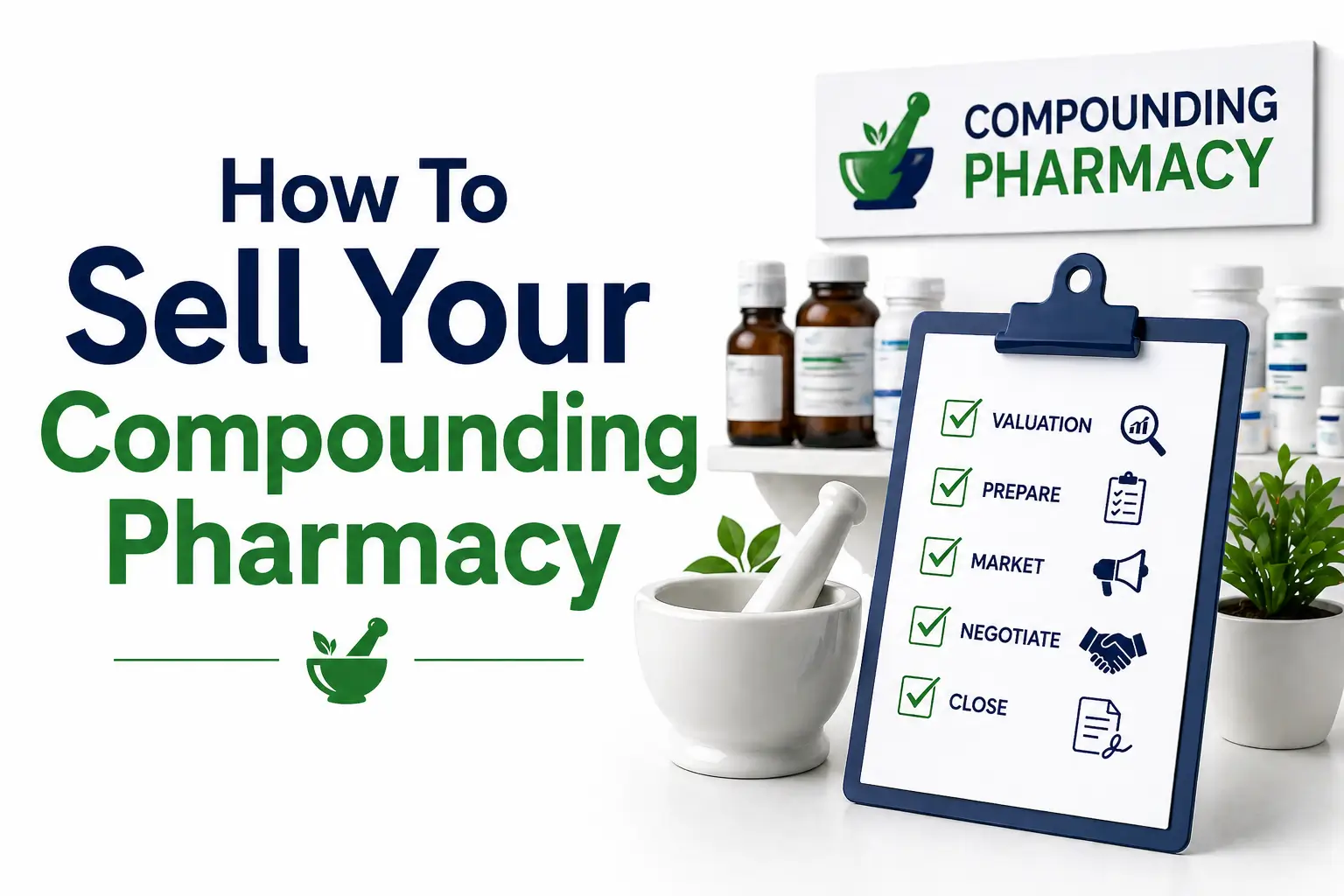
If you want to sell your compounding pharmacy, proper planning, compliance, and strategy will help you attract serious buyers and maximize value. Selling a pharmacy particularly a compounding pharmacy, is no small task. It takes planning, following the rules, and the right strategy to bring in serious buyers. Whether you aim to retire, move on to a new project, or sell to merge into a larger entity, setting your business up to sell secures the value you’ve built into your enterprise.
This piece will explain the key steps to selling your compounding pharmacy lawfully and profitably.
Sell Your Compounding Pharmacy: What It Involves
So, if you want to sell your compounding pharmacy, know there is more to it than just putting your business up for sale. Compounding pharmacies are highly regulated by both state and federal authorities. Buyers will demand transparency, clean records, and evidence of compliance.
At Swift Trades, we assist pharmacy owners in preparing their businesses for sale, sourcing suitable buyers, and making deals in which both parties benefit.
Step 1: Get Your Documents in Order to Sell Your Compounding Pharmacy
Collect All Business Documents Before you list your pharmacy for sale, collect all business documents related to your pharmacy business. These, in turn, will assist potential buyers in determining the pharmacy’s worth and effectuating a smooth transition.
Key documents include:
- Pharmacy license and DEA registration
- Financial statements (last 3 years)
- Prescription volume reports
- Inventory reports
- Employee contracts
- Lease agreements
Good documents will also help establish trust with buyers and make due diligence easier.
Step 2: Understand Legal and Regulatory Requirements to Sell Your Compounding Pharmacy
Compounding pharmacies, which mix medications from the raw ingredients rather than just dispensing drugs, are more tightly regulated than are regular pharmacies.
These are the requirements you should ensure to follow:
- State Board of Pharmacy regulations
- FDA compounding 503A or 503B guidance
- Ability to qualify for DEA registration (when prescribing and storing controlled substances)
- USP and standards for sterile and nonsterile compounding
Ensure all licenses and operations are current, compliant, and transferable to the acquiring firm.
Step 3: Get a Business Valuation
You should understand the fair market value of your pharmacy. A legitimate valuation considers that, Annual revenue and profit margins, Prescription volume and compounding mix, Location and competition, Real estate (if owned)
Type of client served (retail, long-term care, clinics, etc.)
Step 4: Prepare Your Pharmacy for Sale
To attract patients to your pharmacy, you may have to improve store appearance, streamline operations, reduce unnecessary expenses, address any compliance or legal issues that remain unresolved, and educate staff to facilitate the shift
View this as staging your pharmacy like a home for sale. A good, clean business will give a favourable feeling and support your asking price.
Step 5: Find Qualified Buyers
The benefits of selling to the right buyer: Because the ideal buyer will work with the staff, patients, and office manager or booking person to maintain the status quo, your office staff/patients, as well as the reputation of the practice, will remain intact. Potential buyers may include Independent pharmacists, Chain pharmacy groups, Healthcare investors, Long-term care, or specialty providers
When you partner with a reliable pharmacy broker such as Swift Trades, you gain access to pre-qualified and vetted buyers seeking a pharmacy like yours.
Step 6: Negotiate the Sale Terms
You will once you find a buyer, and you’ll negotiate. This stage includes:
- Purchase price agreement
- Asset vs. stock sale decision
- Mode of payment (one-time or regular installments)
- Non-compete clauses
- Transition assistance agreements
It’s recommended to have a lawyer and a financial advisor’s involvement by this stage to protect yourself and ensure that agreements are documented properly.
Step 7: Close the Deal
The last step is to sign contracts, transfer licenses, inform the various state boards and payers, and effect the change of practice operations. It will be incumbent on all parties to work together to maintain patient care, prescription service and staff support.
You can also agree to remain on board for a time as part of the post-sale handover process.
Why Work With a Pharmacy Brokerage?
It’s dangerous and takes a long time to sell a compounding pharmacy for yourself. You can employ the services of a legitimate brokerage like Swift Trades and accurately value your pharmacy, handle buyer outreach and vetting, maintain confidentiality, negotiate favorable terms, and navigate regulatory steps
Their expertise will help ensure that your sale proceeds as cleanly as possible, with the most return.
Final Thoughts
If you’re considering selling your compounding pharmacy, it’s all about being prepared, compliant, and having a knowledgeable advisor. Knowing rules, structuring your business the right way, and getting the proper help can help you defend your carefully crafted legacy and sell your pharmacy successfully.
Ready to take the next step? Call Swift Trades today to start the process with the help of licensed pharmacy brokers who know how your business works.