
Selling a pharmacy is an important business decision that requires strategic planning, financial preparation, and a clear understanding of market value. Pharmacy owners who prepare their businesses before entering the market can improve buyer confidence, strengthen profitability, and potentially secure a more competitive selling price.
Maximizing pharmacy value involves more than increasing revenue. Buyers evaluate financial performance, operational efficiency, inventory management, regulatory compliance, customer relationships, and future growth opportunities. A well-prepared pharmacy demonstrates stability, professionalism, and long-term business potential.
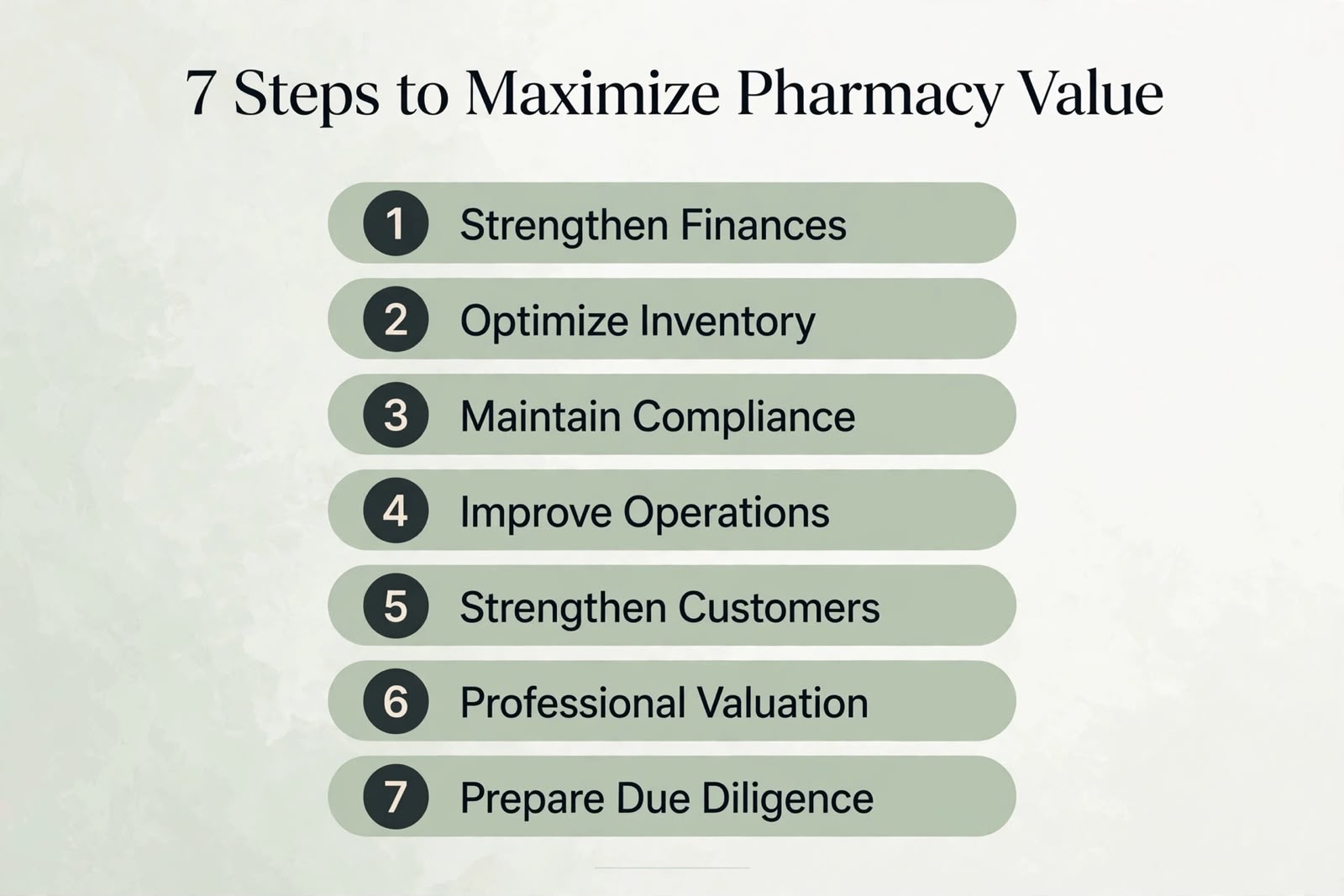
1. Strengthen Financial Performance
Financial performance is one of the most important factors influencing pharmacy valuation. Potential buyers want to review consistent earnings, manageable expenses, and reliable cash flow.
Pharmacy owners should organize at least three years of financial statements, tax returns, balance sheets, and profit and loss reports. Accurate documentation makes the evaluation process easier and builds buyer confidence.
Improve Profitability and Control Expenses
Review staffing costs, rent, supplier agreements, insurance expenses, and reimbursement trends. Identify unnecessary operating costs without compromising patient care. Strong financial management demonstrates that the pharmacy is sustainable and professionally managed.
2. Optimize Inventory Management
Inventory is a valuable business asset that can directly influence a pharmacy’s financial position during a sale. Excess stock, expired medications, and inaccurate inventory records can create concerns for prospective buyers.
Maintain Accurate Inventory Records
Conduct regular stock audits, monitor expiration dates, and identify slow-moving products. Implement effective inventory management systems to minimize waste and improve purchasing decisions.
A well-managed inventory system demonstrates operational discipline and helps buyers evaluate the pharmacy’s overall business value.
3. Maintain Regulatory Compliance
Regulatory compliance is essential when preparing a pharmacy for sale. Buyers typically examine licenses, permits, inspection records, controlled-substance documentation, and applicable healthcare regulations.
Resolve Compliance Issues Before Selling
Ensure that required licenses remain current and operational policies are properly documented. Address outstanding audit findings, billing discrepancies, and regulatory concerns before entering negotiations.
A strong compliance history can reduce acquisition risks and make the pharmacy more attractive to qualified buyers.
4. Improve Operational Efficiency
A pharmacy with established procedures and experienced employees can be more appealing to potential buyers. Businesses that depend entirely on the owner’s daily involvement may present additional challenges during ownership transitions.
Establish Standard Operating Procedures
Document prescription processing, customer service, inventory management, administrative tasks, and employee responsibilities. Provide appropriate staff training to maintain consistent operations.
Efficient systems support business continuity and help new owners manage the pharmacy successfully.
5. Strengthen Customer Relationships
Customer loyalty and community reputation contribute to a pharmacy’s long-term business value. Buyers often consider prescription volume, customer retention, service quality, and relationships with healthcare providers.
Focus on Customer Satisfaction
Prioritize timely prescription fulfillment, professional communication, reliable services, and positive patient experiences. Review customer feedback and identify opportunities to improve service delivery.
A pharmacy with an established customer base and strong market reputation can demonstrate greater business stability.
6. Obtain a Professional Pharmacy Valuation
Before listing a pharmacy for sale, owners should understand its realistic market value. A professional valuation provides an objective assessment of financial performance, business assets, liabilities, and growth opportunities.
Understand Key Valuation Factors
Important valuation considerations include adjusted earnings, cash flow, prescription volume, inventory quality, location, lease agreements, payer relationships, and current market conditions.
Working with an experienced pharmacy valuation specialist or healthcare transaction advisor can help owners establish realistic expectations and develop an effective selling strategy.
7. Prepare for Buyer Due Diligence
Due diligence is a critical stage of a pharmacy acquisition. Buyers generally review financial records, legal documents, employee agreements, supplier contracts, inventory reports, and regulatory information.
Organizing these documents in advance can prevent unnecessary delays and demonstrate professionalism. Pharmacy owners should also protect confidential patient information and follow applicable privacy regulations throughout the transaction.
Conclusion
Maximizing pharmacy value before a sale requires a comprehensive strategy involving financial transparency, inventory control, regulatory compliance, operational efficiency, and professional valuation. Pharmacy owners who address these areas early can strengthen buyer confidence, reduce transaction risks, and improve their negotiating position.
A successful pharmacy sale begins long before the business enters the market. With careful preparation and guidance from experienced professionals, owners can position their pharmacies for a smoother transaction and a more rewarding business exit.
Frequently Asked Questions (FAQs)
1. How can I maximize my pharmacy’s value before selling?
Improve profitability, maintain accurate financial records, optimize inventory, strengthen regulatory compliance, and establish efficient operational systems.
2. What factors influence pharmacy business valuation?
Key factors include adjusted earnings, prescription volume, cash flow, inventory quality, location, customer retention, and future growth opportunities.
3. How early should I prepare my pharmacy for sale?
Ideally, begin preparing 12 to 24 months before the planned sale. This allows sufficient time to improve financial performance and resolve operational weaknesses.
4. Does inventory management affect pharmacy sale value?
Yes. Accurate inventory records, product condition, expiration dates, and stock quality can influence the financial evaluation and transaction negotiations.
5. Why is regulatory compliance important when selling a pharmacy?
Proper licensing, documentation, and compliance procedures help reduce acquisition risks and increase buyer confidence.
6. Should I hire a professional pharmacy valuation specialist?
Yes. An experienced specialist can assess business performance, identify valuation factors, and help establish realistic expectations before negotiations.