
The pharmacy industry is entering a new phase of consolidation, investment, and strategic growth as businesses prepare for 2027. Pharmacy acquisitions are becoming an important strategy for independent pharmacy owners, healthcare investors, private equity firms, and established pharmacy chains looking to expand their market presence. Changing reimbursement models, rising operating costs, digital healthcare adoption, and evolving patient expectations are influencing how pharmacy businesses approach mergers and acquisitions.
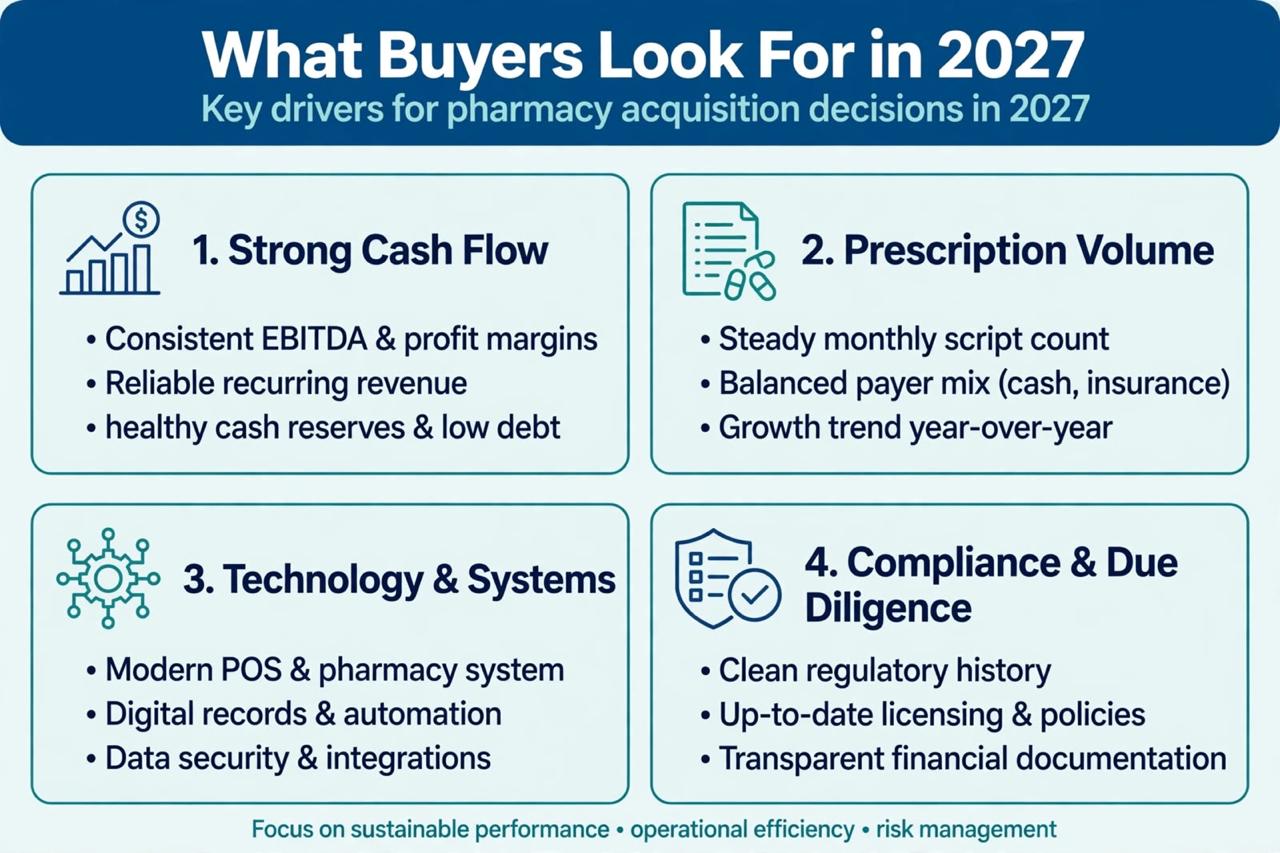
As the healthcare landscape continues to change, pharmacy acquisitions are no longer focused solely on purchasing additional locations. Buyers are increasingly evaluating operational efficiency, prescription volume, patient retention, technology infrastructure, specialty medication capabilities, and long-term profitability. These factors are shaping acquisition strategies and determining which pharmacy businesses are attractive investment opportunities.
Understanding the pharmacy acquisition trends shaping 2027 can help pharmacy owners prepare for potential sales, help investors identify valuable opportunities, and allow healthcare organizations to develop sustainable expansion strategies.
Why Pharmacy Acquisitions Are Becoming More Important in 2027
Pharmacy acquisitions are gaining importance because healthcare businesses are facing increasing financial and operational pressure. Independent pharmacies must manage reimbursement challenges, staffing expenses, regulatory requirements, and competition from large pharmacy chains and online healthcare providers.
Acquiring an established pharmacy can provide immediate access to an existing customer base, prescription records, supplier relationships, experienced employees, and an established presence in the community.
Industry Consolidation and Market Competition
Consolidation is changing the competitive structure of the pharmacy industry. Larger pharmacy organizations and investment-backed groups are exploring acquisitions to increase their geographic reach, improve purchasing power, and create more efficient operating networks.
For independent pharmacy owners, consolidation can create opportunities to sell their businesses, join larger networks, or establish partnerships that provide access to additional resources.
Strategic Growth Through Acquisitions
Instead of building new pharmacy locations from the ground up, buyers may choose to acquire existing businesses with established operations. This approach can reduce the time required to enter new markets and provide access to an existing patient population.
However, successful acquisitions depend on careful financial analysis, regulatory compliance, and the ability to integrate the acquired business into the buyer’s existing operations.
Major Pharmacy Acquisition Trends Shaping 2027
Several important developments are expected to influence pharmacy acquisitions in 2027. Buyers and sellers will need to understand these trends to make informed decisions and identify sustainable growth opportunities.
Increased Interest in Independent Pharmacy Acquisitions
Independent pharmacies remain attractive acquisition opportunities because they often have established relationships with patients, local healthcare providers, and community organizations.
Investors and pharmacy operators may view these businesses as opportunities to enter local markets without starting operations from scratch. Pharmacies with consistent prescription activity, reliable financial records, strong customer retention, and experienced staff may receive greater buyer interest.
Independent pharmacy owners considering a sale should focus on maintaining accurate financial statements, improving operational performance, and documenting business processes.
Private Equity Investment in Pharmacy Businesses
Private equity firms and other investment groups may continue exploring opportunities within the pharmacy sector. Their interest often centers on businesses with scalable operations, predictable revenue streams, specialized services, and opportunities for operational improvement.
Potential investment targets may include specialty pharmacies, regional pharmacy groups, long-term care pharmacies, and businesses with established healthcare service contracts.
However, investors must evaluate reimbursement exposure, regulatory risks, debt obligations, and the sustainability of earnings before completing an acquisition.
Specialty Pharmacy Acquisitions
Specialty pharmacy is an important area of interest because these businesses support patients who require complex medications, specialized handling, and ongoing clinical coordination.
Pharmacies serving patients with chronic and complex conditions may offer opportunities to expand clinical services and develop stronger relationships with healthcare providers.
In 2027, buyers may pay closer attention to specialty pharmacy capabilities, including medication management, patient adherence programs, cold-chain logistics, and payer relationships.
Technology-Driven Pharmacy Acquisitions
Technology is becoming an increasingly important factor in pharmacy valuation and acquisition decisions. Buyers are evaluating whether potential acquisition targets use modern pharmacy management systems, automated dispensing tools, electronic prescription platforms, and reliable reporting systems.
Businesses with strong digital infrastructure may be easier to integrate into larger pharmacy networks.
Technology can also improve inventory visibility, reduce administrative workloads, support prescription processing, and provide better access to operational data.
Growth in Long-Term Care Pharmacy Acquisitions
Long-term care pharmacies serve nursing facilities, assisted living communities, and other residential care organizations. Their business models often involve recurring medication needs, coordinated delivery systems, and relationships with healthcare facilities.
These characteristics may make established long-term care pharmacy operations attractive to buyers seeking specialized healthcare opportunities.
Acquisition evaluations should include facility contracts, medication delivery capabilities, regulatory compliance, staffing requirements, and customer concentration risks.
Regional Expansion and Multi-Location Pharmacy Groups
Regional pharmacy groups may use acquisitions to enter new geographic markets and strengthen their presence in existing territories.
Acquiring multiple locations can create opportunities for centralized purchasing, shared administrative services, improved inventory management, and standardized operating procedures.
Nevertheless, expanding too quickly can create integration challenges. Buyers must evaluate each location individually to understand its financial performance, staffing structure, patient demographics, and local competition.
Financial Factors Influencing Pharmacy Acquisition Decisions
Financial performance remains one of the most important considerations in pharmacy acquisitions. Buyers need to understand not only how much revenue a pharmacy generates but also how much sustainable profit the business can produce.
H3: Revenue Quality and Prescription Volume
Prescription volume is an important performance indicator, but it does not provide a complete picture of business value.
Buyers should evaluate prescription reimbursement, gross margins, payer mix, customer retention, medication categories, and the consistency of prescription activity.
A pharmacy with high prescription volume but weak margins may be less attractive than a smaller business with stronger financial performance.
EBITDA and Business Valuation
Earnings Before Interest, Taxes, Depreciation, and Amortization (EBITDA) is commonly used to evaluate business profitability during acquisition discussions.
Buyers may examine historical EBITDA, adjusted operating expenses, owner compensation, recurring costs, and expected future earnings.
Valuation methods can also consider comparable transactions, business assets, cash flow, and the risks associated with the pharmacy’s revenue sources.
There is no universal valuation multiple that applies to every pharmacy. The final purchase price depends on the business’s financial condition, market position, growth opportunities, and transaction structure.
Reimbursement Pressure and Profitability
Pharmacy reimbursement continues to be a critical issue for buyers and sellers. Changes in reimbursement arrangements, pharmacy benefit manager practices, drug acquisition costs, and payer contracts can influence operating margins.
Buyers should review reimbursement agreements and historical claims performance before determining whether a pharmacy can maintain sustainable profitability after acquisition.
Working Capital and Inventory Management
Inventory can represent a significant investment for pharmacy businesses. Poor inventory management may increase carrying costs, create expiration losses, and restrict available cash.
During due diligence, buyers should review inventory turnover, purchasing practices, expired products, accounts receivable, accounts payable, and working capital requirements.
The Role of Due Diligence in Pharmacy Acquisitions
Due diligence is essential for identifying risks before a pharmacy acquisition is completed. A business may appear financially attractive but contain hidden liabilities, compliance problems, or operational weaknesses.
Financial Due Diligence
Financial due diligence involves reviewing tax returns, profit and loss statements, balance sheets, bank records, reimbursement data, payroll expenses, and outstanding liabilities.
Buyers should compare reported earnings with actual cash flow and identify unusual expenses or nonrecurring revenue.
H3: Regulatory and Compliance Reviews
Pharmacies operate within a highly regulated healthcare environment. Buyers should review licenses, permits, controlled substance procedures, prescription records, privacy practices, billing documentation, and applicable federal and state requirements.
For U.S. pharmacy transactions, relevant considerations may include state board of pharmacy rules, DEA requirements, HIPAA obligations, Medicare and Medicaid participation, and payer contract provisions.
Employee and Operational Assessment
Employees play an important role in maintaining pharmacy operations and patient relationships. Buyers should review staffing levels, compensation structures, employment agreements, pharmacist coverage, training procedures, and employee retention risks.
Operational assessments should also examine prescription workflows, dispensing procedures, supplier relationships, delivery systems, and customer service standards.
How Digital Transformation Is Changing Pharmacy Acquisitions
Digital transformation is influencing the way pharmacy businesses operate and how buyers evaluate potential investments.
Pharmacy Automation and Artificial Intelligence
Automation can help pharmacies manage repetitive administrative tasks, improve inventory tracking, and support prescription processing.
Artificial intelligence may also assist with forecasting, workflow optimization, and identifying operational inefficiencies.
Buyers should distinguish between technologies that are already delivering measurable benefits and systems that require significant additional investment.
Telehealth and Digital Prescription Services
The expansion of telehealth and electronic prescription services is creating new opportunities for pharmacies to connect with patients and healthcare providers.
Businesses that can support digital prescription workflows, medication synchronization, remote patient communication, and convenient refill services may be better positioned to compete in an increasingly digital healthcare environment.
Data Security and Healthcare Technology Integration
Technology integration creates both opportunities and responsibilities. Buyers must assess cybersecurity policies, data protection procedures, system compatibility, and patient information management.
A pharmacy with outdated software or weak security practices may require substantial investment after acquisition.
Challenges Buyers and Sellers May Face in 2027
Although pharmacy acquisitions can create significant growth opportunities, transactions also involve financial, regulatory, and operational challenges.
Rising Operating Costs
Labor expenses, rent, insurance, technology investments, and medication handling costs can affect profitability. Buyers must determine whether the acquired pharmacy can maintain healthy margins under changing operating conditions.
Regulatory Complexity
Pharmacy acquisitions may require ownership disclosures, license updates, payer notifications, contract assignments, and other regulatory approvals. Requirements vary by jurisdiction and transaction structure.
Failing to identify these requirements early can delay closing or create compliance problems after the transaction.
Integration and Business Continuity
Integrating two pharmacy businesses can be difficult when their systems, employees, supplier agreements, and operational procedures differ.
Buyers should develop an integration plan that protects patient services, maintains prescription continuity, and clearly communicates operational changes to employees and customers.
Uncertain Market Conditions
Economic changes, reimbursement pressures, competition, and healthcare policy developments can influence pharmacy valuations.
Both buyers and sellers should use realistic financial assumptions rather than relying entirely on optimistic growth projections.
How Pharmacy Owners Can Prepare for Acquisition Opportunities
Pharmacy owners who may consider selling or expanding through acquisitions in 2027 should begin preparing well before entering negotiations.
Maintain Accurate Financial Records
Organized financial statements help buyers understand business performance and reduce uncertainty during due diligence. Owners should maintain accurate records of revenue, expenses, payroll, inventory, taxes, and outstanding obligations.
Improve Operational Efficiency
Streamlined prescription workflows, effective inventory management, employee training, and consistent customer service can improve business performance.
Documented procedures also make it easier for a new owner to understand and manage the business.
Strengthen Patient and Supplier Relationships
Strong patient retention and dependable supplier relationships can contribute to business stability. Pharmacy owners should prioritize service quality, communication, and reliable medication availability.
Work With Experienced Acquisition Professionals
Accountants, healthcare attorneys, valuation specialists, and pharmacy transaction advisors can help owners prepare for negotiations and identify potential risks.
Professional guidance is particularly important when reviewing purchase agreements, regulatory obligations, payer contracts, and transaction structures.
What Investors Should Look for in a Pharmacy Acquisition
Investors evaluating pharmacy businesses in 2027 should focus on sustainable business fundamentals rather than revenue growth alone.
Consistent Cash Flow and Financial Stability
A strong acquisition target should demonstrate reliable financial reporting, manageable expenses, and a clear understanding of its revenue sources.
Strong Market Position
Established patient relationships, a favorable geographic location, local healthcare partnerships, and a recognizable community presence may support long-term business value.
Opportunities for Operational Improvement
Potential improvements may include better purchasing arrangements, automation, centralized administration, improved inventory controls, and enhanced patient engagement.
Scalable Business Operations
Investors should determine whether the pharmacy’s existing systems and management structure can support additional locations or services without creating excessive costs or operational complexity.
The Future Outlook for Pharmacy Acquisitions Beyond 2027
The future of pharmacy acquisitions will likely be shaped by the interaction of healthcare demand, financial sustainability, technology, and regulatory developments.
Specialty pharmacy services, long-term care operations, regional consolidation, and technology-enabled pharmacy networks may remain important areas of investor interest.
At the same time, independent pharmacies with strong community relationships and efficient operations may continue to attract buyers seeking established local businesses.
The most successful acquisition strategies will likely focus on long-term value creation rather than rapid expansion alone. Buyers who conduct thorough due diligence, understand reimbursement risks, and develop realistic integration plans will be better positioned to achieve sustainable results.
Conclusion
Pharmacy acquisition trends shaping 2027 reflect a changing healthcare marketplace where financial performance, operational efficiency, technology, and specialized services are becoming increasingly important. Independent pharmacy purchases, private equity investment, specialty pharmacy expansion, and regional consolidation may create new opportunities for both buyers and sellers.
However, successful transactions require more than identifying an attractive purchase price. Buyers must understand reimbursement structures, regulatory obligations, financial stability, and integration challenges before completing a deal.
For pharmacy owners, preparing accurate records and strengthening operations can improve acquisition readiness. For investors, focusing on sustainable cash flow, scalable services, and long-term market potential can support better investment decisions. As the industry evolves, informed acquisition strategies will remain essential for building competitive and resilient pharmacy businesses.
Frequently Asked Questions (FAQs)
1. What are the major pharmacy acquisition trends shaping 2027?
Major trends include independent pharmacy acquisitions, private equity investment, specialty pharmacy expansion, regional consolidation, long-term care pharmacy acquisitions, and increased use of technology and automation.
2. Why are investors interested in acquiring independent pharmacies?
Independent pharmacies may offer established patient relationships, existing prescription activity, experienced employees, local market presence, and opportunities to improve operational efficiency.
3. How are pharmacy businesses valued during an acquisition?
Pharmacy valuations may consider EBITDA, cash flow, prescription volume, gross margins, inventory, assets, payer mix, market position, and comparable transactions. The appropriate valuation method depends on the individual business.
4. Is private equity expected to influence pharmacy acquisitions in 2027?
Private equity may remain an important participant in pharmacy investment, particularly in businesses with scalable operations, specialty services, and opportunities for operational improvement. Actual investment activity will depend on market conditions and regulatory developments.
5. What makes a pharmacy attractive to potential buyers?
Attractive characteristics may include consistent financial performance, strong patient retention, reliable reimbursement, organized records, effective inventory management, experienced employees, and regulatory compliance.
6. What should buyers review before acquiring a pharmacy?
Buyers should examine financial statements, tax records, prescription data, payer contracts, licenses, regulatory compliance, inventory, employee agreements, supplier relationships, and outstanding liabilities.
7. How does technology affect pharmacy acquisition decisions?
Technology can influence business valuation by improving workflow efficiency, inventory management, prescription processing, reporting, and patient engagement. Buyers also evaluate cybersecurity and system integration requirements.
8. Are specialty pharmacies attractive acquisition targets?
Specialty pharmacies may attract buyers because they provide complex medication services, patient support, and specialized clinical coordination. Their value depends on financial performance, payer relationships, regulatory compliance, and operational capabilities.
9. How can pharmacy owners prepare to sell their businesses in 2027?
Owners should organize financial records, review regulatory compliance, improve operating efficiency, maintain patient relationships, assess inventory, and consult experienced financial and legal professionals.
10. What are the biggest risks associated with pharmacy acquisitions?
Major risks include reimbursement changes, regulatory violations, inaccurate financial information, employee turnover, unfavorable contracts, excessive purchase prices, cybersecurity weaknesses, and unsuccessful integration.